Understand the uses of screened vs unscreened topsoil for your outdoor projects. Choose the best soil type for aesthetics, stability, and soil health. Read more now!
What is screened and unscreened topsoil
Screened topsoil is soil that has been passed through a large mesh or grid to remove bigger stones, bits of roots, and other debris. The mesh has holes of a set size, so only smaller particles of soil and very small rocks fall through. This leaves a smooth, even soil with a fine texture that is easy to spread, rake and level. It is typically used where a neat, tidy finish is important, such as lawns and flower beds.
Unscreened topsoil is soil that has been taken from the ground and supplied almost as it is, with minimal processing. It can contain a mix of fine soil, small and medium stones, roots, and other natural materials. Because it has not been put through a mesh, it usually looks rougher and more uneven. It is generally cheaper than screened soil, and it is often used where looks do not matter as much.
Although unscreened soil may not look as neat, it can still be very rich and healthy. It may contain higher levels of organic matter, such as old roots and plant remains. These can break down over time and help feed plants, especially in deeper areas of the garden. However, you may need to spend more time breaking up lumps and removing larger stones if you use it near the surface.
In practice, both screened and unscreened soils are useful, but in different ways. Screened topsoil is usually the better choice for visible areas where you will be planting grass seed, laying turf, or creating tidy borders. Unscreened soil is better suited to building up levels, filling deep holes, or making a base layer that will later be covered by finer soil or other materials.
How screening works and why it matters
Screening is the process of passing soil over or through a mesh with regularly sized holes. The machine shakes or rotates so that fine soil and small particles fall through, while larger stones and debris stay on top of the mesh. The size of the machine's holes can be adjusted, so some screened soil is very fine, whereas other batches may be slightly coarser. The result is a much more uniform material that behaves predictably.
This process matters because it gives you more control over the soil you are working with. When you know that stones above a certain size have been removed, you are less likely to hit hidden rocks when carrying out raking, levelling, or planting. This is especially important when preparing a smooth bed for turf or seeding a new lawn. A more even surface also makes it a lot easier to mow the lawn later, without the mower bumping over hidden lumps.
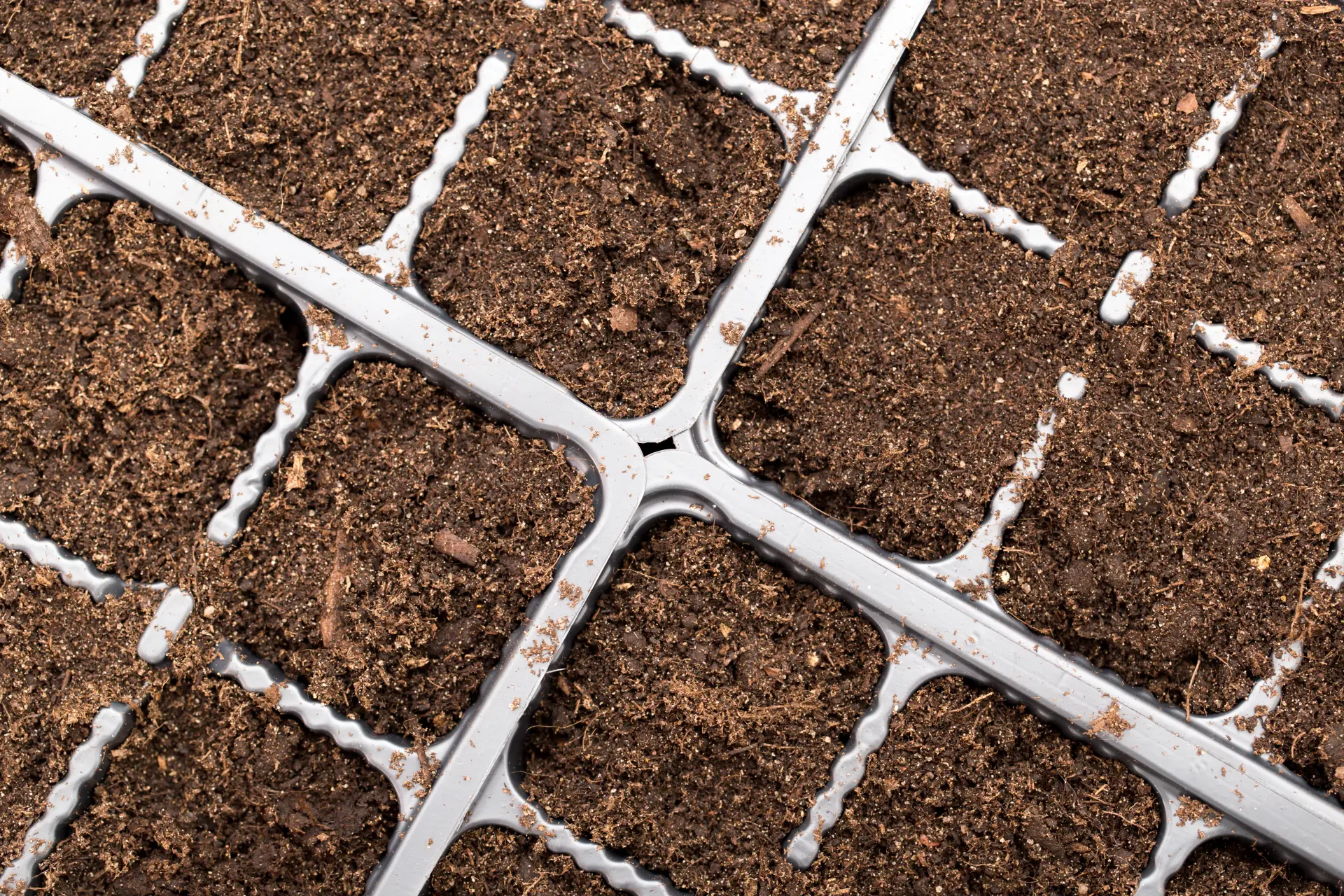
Screening also eliminates the amount of unwanted debris in the soil. This might include bricks, plastic, glass, or large roots that can sometimes be found in soil taken from building sites or old gardens. Removing these objects is not just about looks.
It can also massively improve safety for children and pets who may play on the finished lawn or borders. It is also a great way to protect tools from damage and save time during planting.
Another reason screening matters is that it helps soil spread more evenly. Fine, screened soil rakes out smoothly and can be laid in thin, even layers.
This makes it ideal for creating fine finishes, such as the last 5 to 10 centimetres before turf or seed. When you are trying to achieve a specific depth across a wide area, screened soil makes the work more accurate and less tiring.
Particle size, stones and debris
One of the most notable differences between screened and unscreened topsoil is the particle size. Screened soil has most of its larger lumps removed, so the particles are more even and smaller. This makes it feel much softer underfoot and easier to work with a rake or spade. The more even the particle sizes are, the smoother the final surface tends to look.
Unscreened soil has a wide mix of particle sizes. You might find fine soil, small stones, bigger rocks, clumps of clay, and bits of root all together. This mix can be useful in some areas because different particle sizes can add strength and stability. For example, if you are building up ground behind a wall or filling in a deep hole, the mix of sizes can help stop the soil from moving as much.
Stones play an interesting role. A few small rocks in screened soil can actually help with drainage and structure. They stop the soil from packing too tightly together and allow tiny spaces for air and water to move. However, too many large stones, as often found in unscreened soil, can make digging and planting much harder. They can also get in the way when you are trying to level a surface for turf.
Debris, such as bricks, plastic, and old metal scraps, is more common in unscreened soil, especially if it comes from land that has been developed. This debris does not help plant growth and can be a nuisance or even a hazard. While you can pick these items out by hand, it adds extra work. Screened soil reduces this problem by removing much of the debris during the screening process, leaving you with cleaner material to use.
Drainage and water holding
Good soil needs to manage water well. It should allow extra water to drain away so that roots do not stay soggy, but it should also retain enough moisture for plants to use between rains. Its even texture allows water to move through at a steady rate, without pooling too much on the surface.
Screened soil is free from very large lumps and clods, and this means water can flow through more evenly. There are fewer big gaps where water can rush through and vanish, and fewer hard lumps that keep water sitting in one place. This even behaviour is very helpful when growing a lawn. Grass roots like consistent moisture, and they do not thrive under long dry spells followed by short periods of flooding.
Unscreened soil can behave less predictably. If it contains many large stones or very compact lumps of clay, water may either drain too fast or sit in pockets. In some cases, water can gather around the bigger pieces and cause small soggy zones, while other parts dry out too quickly.
This uneven moisture can make it harder for plants to grow evenly and may lead to patchy grass or weak shrubs.
However, unscreened soil can still be very useful for drainage in deeper layers. The mix of particle sizes can help create a base that lets water pass downwards instead of sitting near the surface.
If you add an extra layer of screened soil on top, you'll receive many benefits of both types of soil. The screened layer gives a smooth surface and even moisture near the roots of your plants, while the unscreened layer below helps excess water escape.
Nutrients and organic matter
Both screened and unscreened topsoil can contain sufficient levels of essential nutrients that plants need, such as nitrogen, phosphorus, and potassium. These nutrients help plants grow leaves, roots and flowers.
The amount of nutrients is based more on where the soil came from and how it has been managed, rather than just on whether it is screened or not. That said, the screening process can slightly change the balance of organic matter.
Organic matter is the remains of plants, roots, leaves and tiny organisms that have broken down in the soil. It is very important because it helps the soil hold water, improves structure, and supplies a slow, steady supply of nutrients. Unscreened soil often contains more visible bits of organic matter, such as larger roots and plant pieces. As time passes, these will break down and feed the soil, which can be helpful, especially in deeper layers.
Screened soil may lose some of the larger pieces of organic matter that are caught and removed by the mesh. However, many fine particles of composted material and humus still pass through the screen. These fine particles are very active in feeding plants and improving soil health. In well-produced, screened soil, the level of useful organic matter can still be quite high, even if you do not see big bits of roots.
Looking for reliable topsoil delivery in Bradford, Halifax, or across North Yorkshire? Greenlands Turf & Topsoil Supplies Ltd provides high-quality Grade 1 and value topsoil with fast local delivery, ideal for gardens, landscaping, and construction projects of any size.