Explore the pros and cons of porcelain vs Indian sandstone for patios and paths. Make an informed choice based on style, durability, and upkeep for your UK garden.
What are porcelain and Indian sandstone?
Porcelain and Indian sandstone are two popular choices for patios, paths and garden spaces. Porcelain is a man made tile, fired at very high temperatures so it becomes dense, hard and almost non porous. Indian sandstone is a natural stone, cut from quarries into paving slabs. Each slab is unique, with its own pattern and shade.
Homeowners often compare the two because both can look attractive, last for many years and improve the look and value of a property, but they behave very differently in use and need different care over time. Understanding the differences between how they are made, how they feel underfoot and how they weather outdoors will help you decide which surface is better for your project.
How each one looks colour, texture and style
In appearance, porcelain and Indian sandstone give very different effects. Porcelain slabs are manufactured, so colours and patterns are carefully controlled. They often copy the look of natural stone, wood or concrete, but every tile in a batch will look almost the same.
Many people like this neat, modern style with clean edges and straight lines. Textures can range from very smooth to lightly textured, so you can choose a finish that suits your taste and the style of your home and garden.
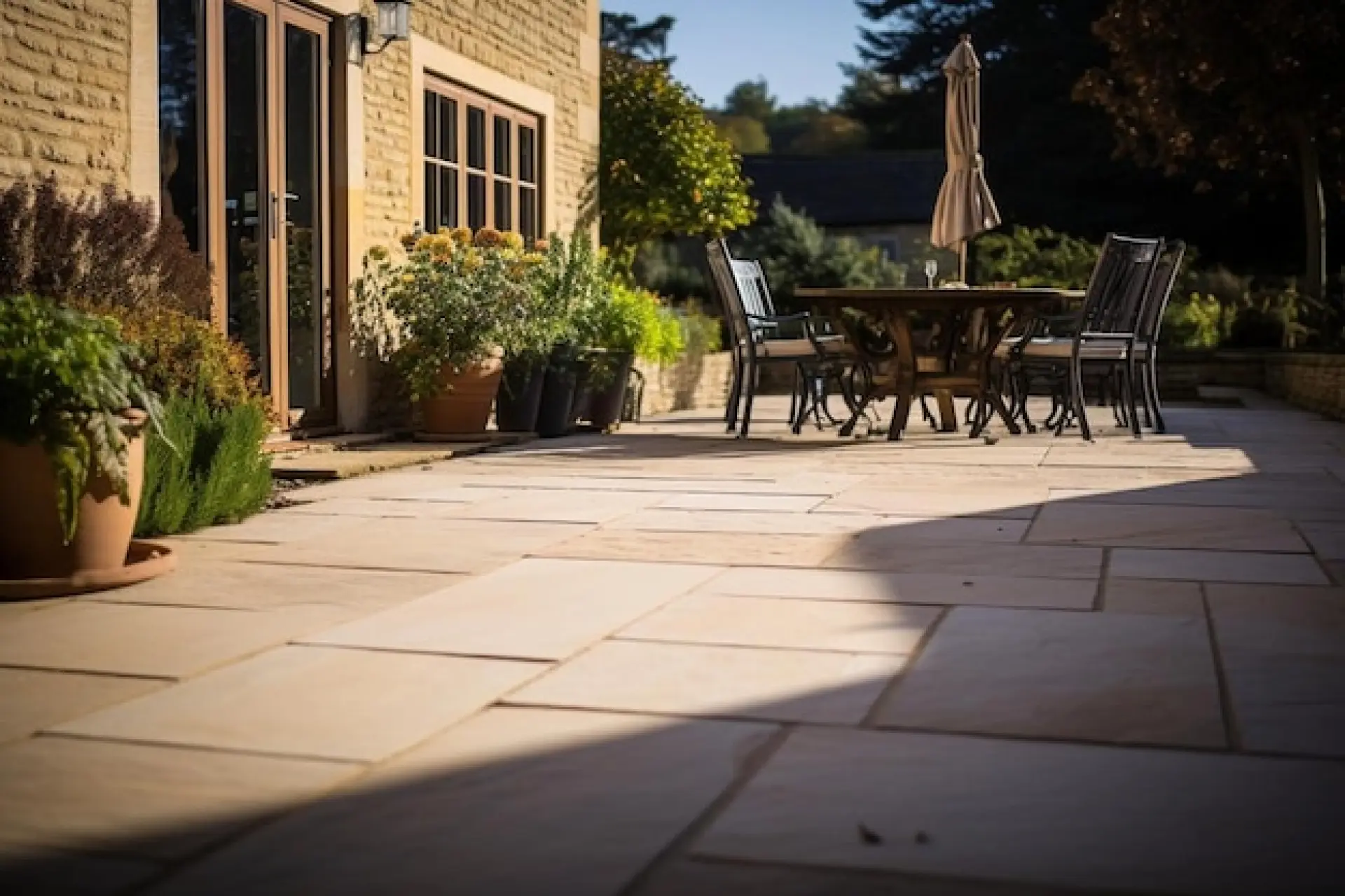
Indian sandstone has a much more traditional feel. Because it is natural stone, no two slabs are identical. You will see gentle colour changes, ripples, veins and fossil like marks across the surface.
The edges are usually slightly uneven, which gives a softer, more rustic look. Colours range from warm buff and brown through to greys, greens and mixed packs, so you can match older properties or create a classic cottage style patio.
With porcelain, the colour on the surface is very stable, so it does not fade quickly in strong sunlight. The regular size of the tiles also allows narrow, even joints, which can create an almost indoor look on a patio. Indian sandstone can change more as it weathers.
In shaded or damp gardens, some stones may darken, and natural minerals can build up gentle shading. Some homeowners enjoy this soft, lived in feel, while others prefer the consistent, tidy style that porcelain usually gives. Both materials can be beautiful when chosen to suit surroundings.
Slip resistance in wet and dry weather
Slip resistance is an important safety point for any patio or path. Most outdoor porcelain tiles are made with a textured surface and a grip rating that is suitable for gardens, even when the tiles are wet. They often feel slightly rough underfoot, which helps shoes and bare feet keep contact. Indian sandstone also offers good slip resistance when the surface is natural and not highly polished.
The riven texture and small ridges help water drain away so you have more grip. However, if algae or moss are allowed to grow on sandstone, the slabs can become quite slippery, so regular cleaning is important, especially in shaded or north facing areas of the garden. This matters for children and older.
Strength and durability over time
Both porcelain and Indian sandstone are strong materials, but they behave differently over time. Porcelain is extremely dense, with very low water absorption. This means frost, ice and heavy rain are less likely to cause cracks or surface damage when the paving is installed on a solid base.
It also resists staining from food, drink and everyday spills, which can be useful in seating or barbecue areas. Heavy furniture and planters are unlikely to mark or wear down the surface. Indian sandstone is also tough, but it is a natural stone, so some types are softer than others.
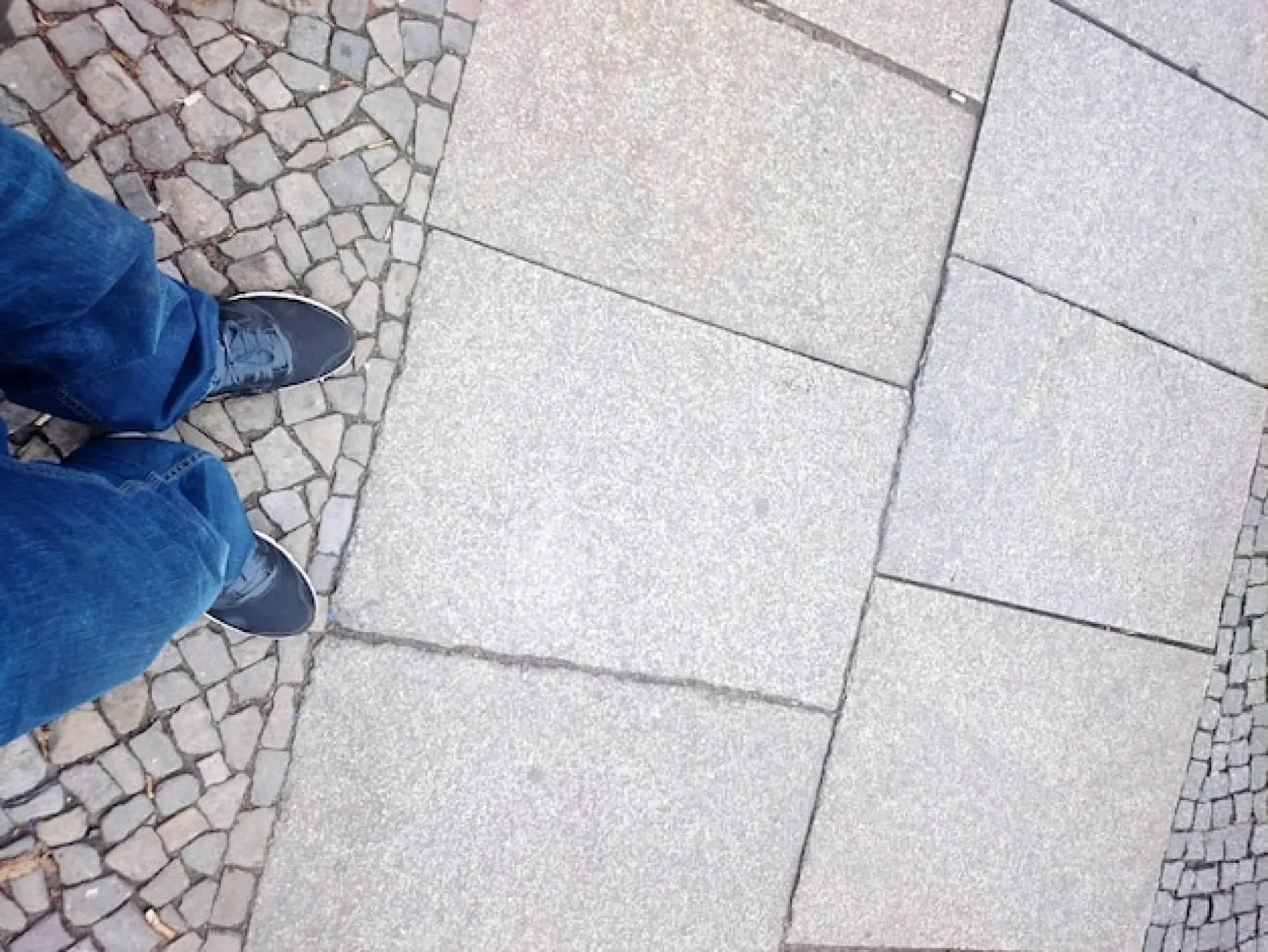
In busy areas, the surface may slowly wear and become smoother, especially on cheaper, thinner slabs or on sandstone with softer minerals. Over many years, sandstone can also suffer from salt damage or slight flaking on the surface, known as delamination, if it is not laid correctly or if poor quality stone is used.
Good installers will choose the right thickness and type of sandstone for the job and make sure there is a firm, well drained base beneath.
Porcelain usually stays the same from year to year, which many people like. However, because it has almost no flex, any movement in the sub base can sometimes lead to cracking along weak points.
For both materials, correct installation with suitable bedding, pointing and falls for drainage is the key factor. When laid well, each can provide decades of reliable service in a family garden. Check product guarantees to compare expected realistic lifespan.
Maintenance how much cleaning and sealing
Day to day care is often where porcelain and Indian sandstone differ most. Porcelain is very low maintenance because it is so dense and non porous. Most dirt sits on the surface and can be cleaned away with a brush, mild detergent and water. It does not usually need sealing, and many stains can be removed with simple cleaning products. Indian sandstone needs more regular attention.
The tiny pores in the stone can absorb dirt, algae and stains, especially from leaves or barbecues. Sealing the slabs helps protect the surface but may need repeating every few years. Light pressure washing and gentle patio cleaners are often used to keep sandstone looking fresh and reduce the growth of moss and algae.
Porcelain and Indian sandstone both create attractive, long lasting patios, but they suit different needs. Porcelain offers a sleek, modern look, very low maintenance and strong resistance to stains, frost and fading. Indian sandstone gives a natural, traditional feel, with unique colour variation, but needs more cleaning, sealing and care to stay looking its best.
Contact us today for porcelain and indian paving suppliers in Bradford, Halifax and North Yorkshire.